

Every technological wave reaches a quiet threshold when progress dissolves into the background. Software stops dazzling and becomes the invisible machinery beneath daily life. Interfaces soften, latency fades, and what once felt like engineering brilliance becomes unremarkable utility. At this point, the pivotal question shifts. The debate is no longer about whether technology can perform but about how that performance acquires cultural meaning. The next era belongs not to those who write the most sophisticated code, but to those who understand how to transform technology into behaviour, ritual, and trust. Creativity becomes the final advantage.
This evolution sets the stage for a deeper contrast: while execution has become plentiful, meaning has grown scarce.
Execution Is Abundant. Meaning Is Scarce.
Code once felt like magic because it delivered what was previously impossible. Now, with AI accelerating automation across tasks, the cost of execution falls, and technical differentiation narrows. Although optimisation still matters at scale, it rarely determines whether a product becomes part of people’s emotional landscape. Once the plumbing is reliable, the constraint shifts to interpretation. Meaning, not efficiency, becomes the battleground.
Meaning is created by people who understand voice, symbolism, rhythm, humour, and the subtle textures that shape how a user feels inside a system. It determines whether an app feels transactional or companion-like, whether a prompt feels manipulative or helpful, and whether a product becomes a habit or remains a tool. Engineers provide capability. Creators provide significance.
This interplay between capability and cultural resonance becomes even clearer when we look at the expansion of super apps, where infrastructure alone does not decide adoption.
Super Apps: Infrastructure Competes, Imagination Decides
Super apps are celebrated for their technical integration of chat, payments, commerce, utilities, and services into one seamless interface. The sector is projected to grow from 127.1 billion USD in 2025 to 861.9 billion USD by 2035, with a compound annual growth rate (CAGR) of 21.1%. Yet scale alone does not create daily use. A super app wins only when the experience feels natural, inevitable, and culturally aligned. This becomes clearer when examining how certain platforms moved from utility to behaviour.
In India, Paytm began as a simple mobile wallet but has evolved into a multi-layered ecosystem spanning payments, bill payments, ticketing, and digital wealth products. Its technical foundation is robust. Its cultural adoption is the real story. Paytm now serves more than 100 million monthly active users and reported nearly 96 million monthly transacting users in FY 2024. These numbers are not a measure of engineering alone. They signal a deeper behavioural shift. Paytm QR codes became the default way to conduct everyday transactions, from corner shops to metro stations. The act is no longer technological. It is instinctive. And instinct is created through cultural design.
A similar transformation can be seen with Grab in Southeast Asia. What began as a ride-hailing app expanded into food delivery, logistics, cashless payments, and financial services through GrabPay. Grab’s infrastructure enables scale, but its relevance emerges from its cultural intelligence. The company now serves 46 million monthly transacting users as of 2025, and its on-demand GMV grew 20% year-on-year in Q4 2024. These are not just indicators of usage. They reflect trust. Grab became the everyday companion that helps people navigate the logistical and cultural complexity of diverse Asian cities.
Together, these examples reveal a simple truth. Technology provides the structure, but creativity determines how that structure is lived. The technical stack can support countless features. Only creative intelligence decides which of those features become rituals, which become emotional anchors, and which disappear into the noise.
Once a super app reaches this point, infrastructure fades. Behaviour takes over. And the same shift is now reshaping commerce, where emotional context increasingly determines loyalty, desire, and the willingness to buy.
Everything Is Commerce: The Feed Turns Into the Store Window
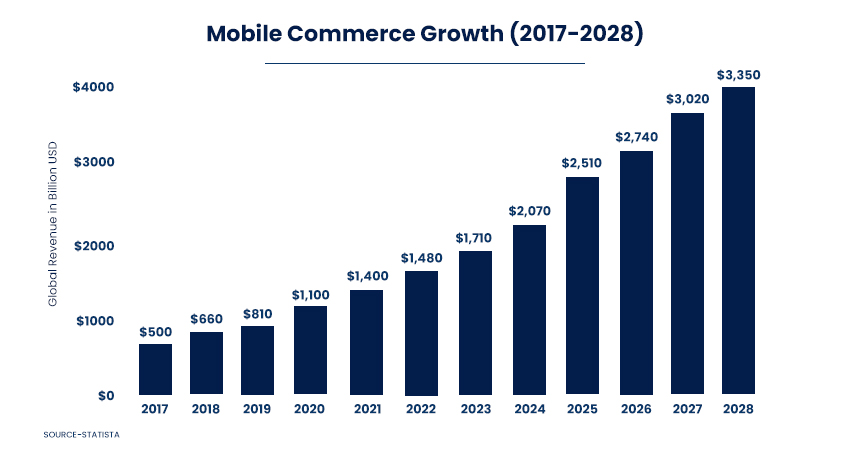
The distance between inspiration and purchase now rarely exceeds a swipe. Mobile-first commerce has compressed discovery, desire, and decision into a continuous behavioural loop. By the end of 2025, approximately 59% of global online retail sales will originate from mobile devices, and m-commerce is forecast to reach $3.35 trillion by 2028.
But technology is only the door. Creative framing determines whether the user crosses the threshold. The narrative around a product, the emotional tone of the moment, and the cultural signals embedded in the feed decide whether commerce feels frictionless or forced. Without that emotional logic, commerce remains a transaction. With creativity, it becomes instinctive behaviour.
Commerce is stretching even further: quick commerce—the minute-scale delivery of essentials—has turned near-instant gratification into routine. The market is expected to touch $10–12 billion in 2025, with projections pointing toward sustained growth beyond (). Leading players such as Blinkit, Zepto, and Swiggy Instamart now define the space, turning need into expectation and consumption into habit.
Consumers no longer measure speed alone. Habits form around consistency, tone, reassurance, and the feeling that the service understands them. In other words, capability becomes expected; imagination becomes a competitive advantage.
Just as commerce transforms convenience into ritual, physical reality is now folding into the digital layer—where the next wave of differentiation will be forged through imagination rather than infrastructure.
AR Moves From Novelty to Narrative Space
Augmented Reality is often characterised as a frontier technology, but its success depends on narrative, not novelty. The global AR market, valued at 83.65 billion USD in 2024, is expected to surge to 599.59 billion USD by 2030 at a CAGR of 37.9%. Across retail, education, healthcare, manufacturing, and entertainment, AR is creating immersive formats for interaction.
Yet AR becomes meaningful only when it evolves from a demonstration into a storytelling space. A virtual try-on is more than a tracking algorithm; it is identity, aspiration, and play converging in a moment. A workplace overlay is not only precise; it is didactic. Technology supplies precision. Creativity supplies coherence.
As AR becomes part of physical life, it underscores a larger truth: technology that cannot conjure meaning is merely a feature.
Audio Becomes the Quiet Infrastructure of Intimacy
Audio formats have become the soft architecture of modern routine. Podcasts, voice assistants, and conversational interfaces create companionship that screens alone cannot replicate. In 2025, global podcast listenership is expected to reach 584.1 million, growing steadily toward 651.7 million by 2027. The podcast industry’s global revenue footprint now sits near $38 to 40 billion annually.
Technology transmits sound. Creativity shapes rhythm, tone, presence, and atmosphere. This is how audio becomes ritual, turning passive users into devoted listeners and establishing emotional proximity between creators and audiences.
Across super apps, commerce, AR, and audio, one truth emerges: creativity becomes the decisive advantage.
The Creative Advantage. What Code Cannot Replicate
As technology becomes abundant, the real scarcity is cultural intelligence. Products need emotional truth as much as technical accuracy. They need narrative as much as interface. They require judgment, taste, empathy, and moral imagination.
The moat is no longer the algorithm. It is the cultural meaning around the algorithm—the emotional texture that turns tools into companions. Teams must master context, behaviour, symbolism, and the emotional physics of interaction. These are creative skills, the intangible infrastructure of future adoption. This creative intelligence becomes the differentiator between functionality and habit.
How Future Builders Can Win. Creativity Built Into the Product
Creativity is not punctuation at the end of product development. The most enduring products are designed with imagination embedded in every stage of creation.
Successful builders act like storytellers and anthropologists. They treat onboarding flows as mini narratives rather than procedural checklists. They craft experiences that resonate emotionally rather than merely functioning practically. Designers, product thinkers, behavioural experts, and creative storytellers work side by side with engineers. Their task is to build products that feel like companions, not tools.
Every interaction becomes a moment of meaning. Onboarding is a story, not a series of forms. A new feature becomes a ritual gesture rather than a menu option. Products built this way feel, on instinctive levels, alive. They establish routines, shape behaviour, and deepen their roots in culture.
That is how future builders convert capability into identity, and how products become stories rather than machines.
Why Small Teams Often Triumph. Originality Over Scale
Startups focus on imagination because they do not have the luxury to compete on infrastructure. They are forced to experiment faster, create bolder rituals, and design experiences that feel distinct. Large companies can replicate features. They cannot replicate feelings. That is where creative originality becomes the moat. This is the ultimate proof that code can be copied, but culture cannot.
In the end, the future will not be shaped by the sophistication of code but by the imagination that gives it meaning. Technology is the skeleton of modern systems. It moves efficiently, scales effortlessly, and enables global reach. But code alone does not determine cultural adoption. Creativity does. As super apps expand, commerce embeds into every feed, AR blends with physical life, and audio becomes a daily companion, the decisive force will be the imaginative intelligence of the teams building these experiences.
Technology becomes culture only when structure and story move together. Products endure when they speak not just to needs but to meaning. In that union of capability and creativity, culture compounds, trust forms, and the future is written.