

A product launch once bought a week of calm. Banners are down, influencer content is tapering, and teams are breathing again. Not anymore. In consumer tech, the quiet never comes. The real work begins once the noise fades, where installs are only invitations and the real exam is daily use, habit, and value delivered.
Acquisition shifts, product speed increases, and retention become the key metrics. Today, users arrive curious, not loyal. They swipe in expecting magic and swipe out the moment friction appears. What once took a quarter now compresses into weeks. Feedback loops tighten, and value must land quickly, repeatedly, and almost invisibly.
AI has turned a marketing burst into a durability test. It flattens distribution but raises the bar on intelligence and iteration. The question now is simple: does the brand compound once the spotlight moves, or does it fade into the scroll?
Because beneath the post-launch noise settling on the surface, the terrain is shifting underneath. AI is not adding features; it is dissolving old rules. Consumer tech brands no longer compete on who launches louder, but rather on who learns faster, adapts continuously, and earns a habit, not hype.
The Surge Has Landed
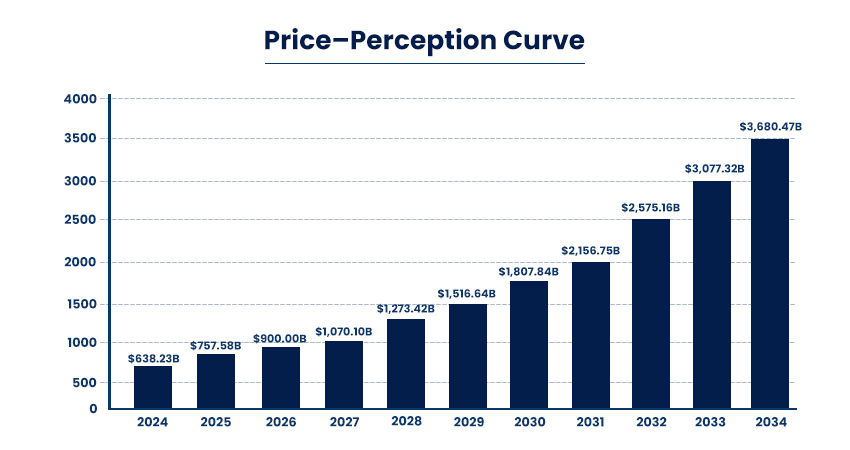
Across device makers, apps, and services, the second wave of AI has crossed into the mainstream. According to a Deloitte consumer study, 53% of U.S. consumers now use or experiment with generative AI, up from 38% a year prior. Globally, the AI market is valued at approximately USD 391 billion, with projections of nearly 9 times growth by 2033.
In India, the shift is more accelerated because of digital rails. For example, the UPI network crossed 100 billion annual transactions in 2023. (NPCI) The IndiaAI Mission outlines USD 1.24 billion public investment to build compute and model capability. And 82% of Indian participants are open to enhancing their purchase decisions using AI. For founders, this moment is not about whether AI enters the stack but how it reshapes the plumbing of growth, product economics, and loyalty. Consumers are no longer waiting for AI; they are expecting it. The bar has moved quietly and permanently.
Acquisition Economics: A New Framework
The old motion was linear: buy attention, optimise creatives, measure clicks, retarget. The new motion is probabilistic, inference-driven, and self-improving. Model-based targeting, AI-generated creatives, and automated ad-to-action loops are rewriting funnel math. One large field experiment found that generative-AI enhancements increased conversion by up to 16.3%. (arXiv)
In India, where CAC inflation is real in metros and Bharat is discovering digital relevance at scale, AI-powered targeting becomes a survival discipline. For example, 71% of Indian retailers plan to adopt generative AI in the next 12 months.
This is not just lower CAC, it is a new unit-economics logic. Targeting improves, and onboarding sharpens. But inference, model calls, and personalisation layers become recurring cost lines. AI is not a bolt-on; it is an operating layer. Founders who treat it like “free efficiency” will build margins on sand.
Product Velocity: Speed as Strategy
AI compresses cycles. Prototyping, micro-testing, dynamic personalisation, in-session adaptation, and product velocity become a competitive weapon. In this era, speed is not motion; it is learning density.
Yet speed without alignment is noise. Research from McKinsey & Company finds that only about 17% of organisations derive more than ~5% of EBIT from AI. Indian consumer companies are already adapting. For example, some D2C brands and hyper-local services are iterating supply chain, micro-fulfilment, and in-session nudges. Consumer tech winners will treat experimentation as an operating cadence, not a quarterly initiative. Every feature becomes an evolutionary test, not a milestone.
Retention and Moats: Where the Fight Moves
Acquisition is loud. Retention is quiet, and that is where the upside sits. In a consumer-AI usage survey, frequent users leaned on AI for research, learning, and product-service discovery, which signals a behavioural shift: consumers reward intelligence, not novelty.
In India, trust and habit outweigh novelty. The UPI habit did not scale because of incentives, but because it made the act of paying vanish. Some consumer-tech brands built convenience into muscle memory. The funnel evolves from acquisition → hook → habit. AI enables personalised onboarding, anticipatory nudges, and session-aware experience shaping. The result: your product stops being an app and becomes a reflex.
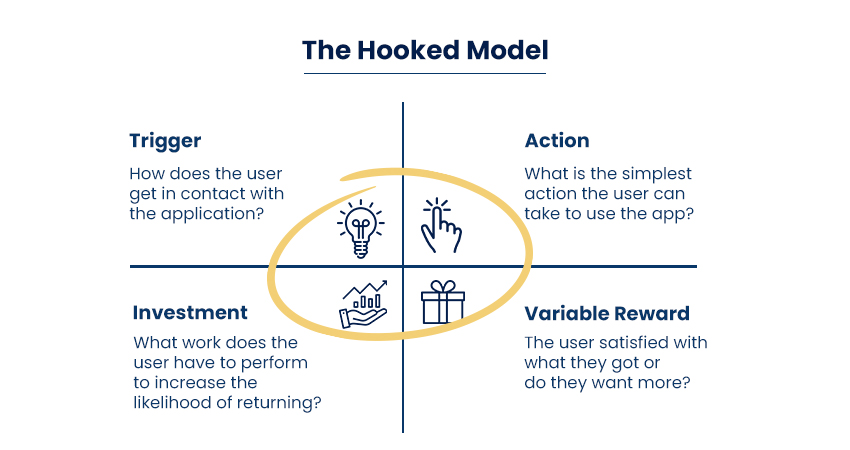
Moats are being rewritten. Proprietary algorithms still matter, but with open weights and rapid capability diffusion, they are less durable. What holds?
- Distribution surface — controlling where behaviour happens
- Embedded workflows — becoming part of daily rituals, not app lists
- Ecosystem lock-in — identity, payments, and integrations that increase switching cost
Brands that treat AI as a feature will compete in the noise; those that treat it as orchestration will compound their value.
The Hard Trade-offs
- Unit economics reset
Model-serving cost, LTV uplift, and infra drag matter. CAC improvements must offset the compute footprint.
- Signal infrastructure becomes core.
Clean data, real-time feedback, rapid learning loops. The sharpest signals win.
- Workflow integration beats feature shipping.
Own a high-frequency ritual before chasing breadth.
- Organisational scaffolding drives velocity.
Speed without governance equals chaos. Decision maps, ownership, and AI guardrails matter.
- Trust becomes currency
A Deloitte survey found that only ~33 % of consumers trust companies with AI-collected data. India mirrors this with low digital-trust confidence. For example, according to PwC India’s Digital Trust Insights, concerns about data protection are high. The moat is as reliable as capability.
A Primer for Consumer-Tech Founders
- Re-map your acquisition funnel: what portion of your CAC improvements will come from AI-driven targeting or onboarding?
- Identify your network of signals: what user gestures, data flows, and real-time behaviours will animate your AI loop?
- Choose one user ritual: mobile check-in, voice interface, wearable trigger, or chat. Ask: How can AI reduce friction by half in this ritual?
- Build switching cost structures: identity, payments, integrations.
- Make transparency a feature, not a footer line.
Rukam’s Take: The Next Ridge
As founders building the next generation of consumer tech in India, your task is not to chase the next launch but to engineer the second wave. Campaign-driven growth is over. What matters now is continuous adaptation, deep embedding of AI into product DNA, and evolving habits before the competitor even realises the rule-book has changed. The companies that win will be those that treat AI not as a new toy but as the new terrain. That terrain demands shorter loops, sharper signals, and richer workflows.
The moat will not be built on features alone but on frameworks that make your product the default cognitive choice, not just another icon on the screen. In India, especially, where convenience, trust, and repetition shape behaviour, the winners will build silently compounding systems, not spikes.
The Quiet Second Act
The fireworks matter, but the slope after them decides the year. In consumer tech, the real game unfolds in the weeks following the launch, as re-engagement, habit formation, and retention economics take hold.
In the age of AI, that second act is where winners emerge. If acquisition evolves, product learns fast, and retention is engineered through habit and workflow, brands don’t spike—they build momentum moats. If not, the spike burns.
For founder-led consumer brands, the brief is clear: it is no longer just what you build but how fast it learns, how deeply it embeds, and how naturally it becomes the default choice. AI is the medium. Habit is the outcome. Orchestration is the moat.