

Artificial Intelligence is often described as a single, unstoppable wave, one technology destined to reshape everything at once. But beneath this broad narrative, the real divergence is happening at the startup level, where companies are differentiating themselves not by technology alone, but by the role they choose for AI in human workflows.
For founders building real products in today’s AI landscape, the most consequential decision is not model selection or compute power, but intent. Beneath the hype, every startup is quietly taking a position: should AI help humans work better, replace human labour altogether, or enable outcomes humans could never reach on their own?
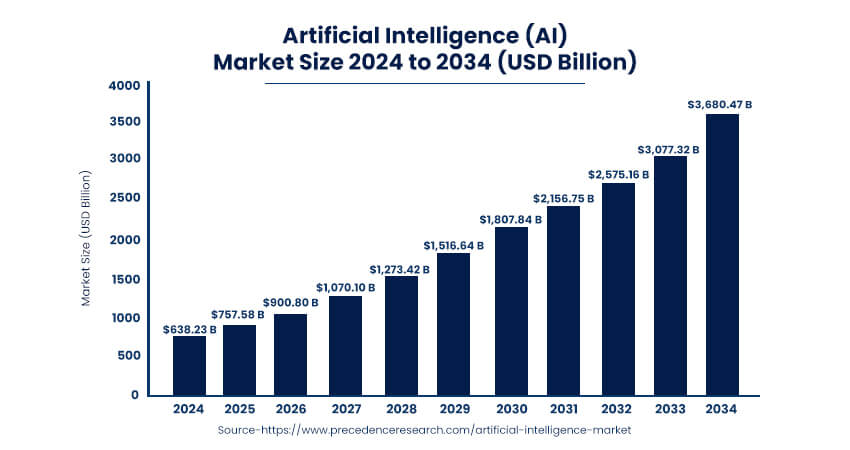
The stakes for this decision are high because AI is now the dominant force in global tech investment. In 2025, AI startups captured around 51% of total venture capital funding worldwide, and generative AI alone raised $49.2 billion in the first half of the year, already surpassing the total VC funding for all of 2024. This demonstrates sustained investor confidence and highlights the enormous scale of opportunity in the sector.
As of 2026, AI has clearly moved from an experimentation phase into a utility phase. What once felt novel is now routine. ChatGPT is no longer a curiosity. Copilots are embedded in daily work. Autonomous agents are quietly running workflows in the background. As AI becomes infrastructure, the market no longer debates whether AI works, but how it is deployed and what role it plays.
The Rise of Three Startup Archetypes
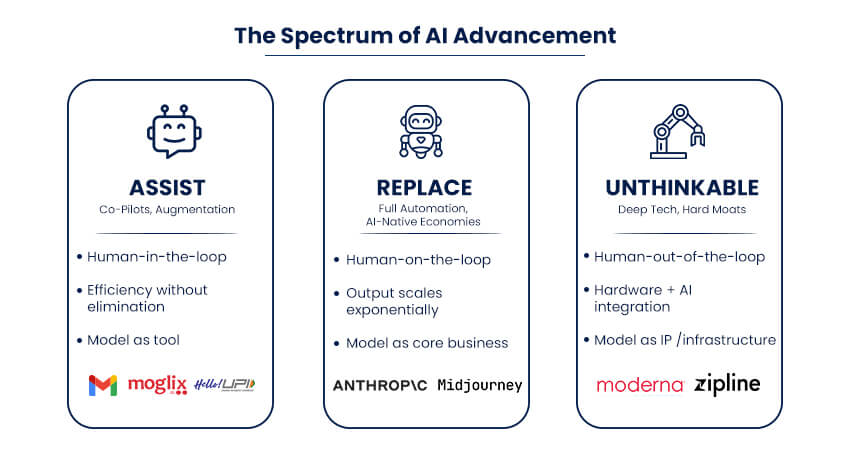
This shift has given rise to three distinct startup archetypes, each built on a fundamentally different relationship between humans and machines. Some companies focus on making people more effective. Others aim to remove people from execution altogether. And a rare few are using AI to push beyond the limits of human cognition itself. Founders choose among these paths, often implicitly. Investors, in turn, learn to recognise them quickly, because each model carries different assumptions about risk, scale, defensibility, and time horizons.
Understanding which model you are building is not an academic exercise. It directly shapes your product roadmap, trust requirements, go-to-market motion, and ultimately, the durability of your moat.
Assist: The Intelligence Copilot
The Assist model is the most common and the most immediately accessible form of AI. These startups build systems that sit alongside humans and reduce friction in thinking, writing, analysing, or decision-making. The AI generates suggestions, drafts, summaries, or insights, but the final decision always rests with a person.
Products like ChatGPT, Gemini, Notion AI, and Jasper help users brainstorm ideas, rewrite emails, summarise documents, or explore concepts faster. GitHub Copilot suggests code, but developers still review, edit, and commit it. Even in healthcare, tools like Aidoc flag abnormalities in scans, but doctors remain responsible for the diagnosis. The key is that AI augments human thinking rather than replacing it.
The defining feature of Assist startups is that accountability remains human. This dramatically lowers the trust barrier. The AI does not need to be perfect to deliver value; it only needs to be directionally helpful. That is why Assist products see fast adoption and relatively short sales cycles. They fit into existing workflows instead of disrupting them, and they feel like leverage rather than a threat. From an investor lens, these companies often attract early interest because usage is visible, engagement is measurable, and adoption spreads organically.
However, this same strength also creates a ceiling. Many Assist startups risk becoming nice-to-have features rather than enduring businesses. When the core value is speed or convenience, large platforms can replicate it quickly. The challenge for Assist companies is to build defensibility beyond prompts and UI through deep workflow integration, proprietary data, or embedded distribution.
Replace: The Autonomous Agent
The Replace model takes a more aggressive stance. These startups are not trying to help humans do the work better. They are trying to remove humans from execution entirely. Here, AI shifts from being a tool to being an agent, one that can make decisions, take actions, and complete tasks end-to-end with minimal supervision.
We already see this in production today. AI-driven Chatbots in customer support platforms now resolve tickets without ever involving human agents. In many cases, customers never realise that a person was not involved. In fintech, companies like Upstart automate lending decisions previously handled by analysts. In sales and operations, autonomous agents optimise campaigns, qualify leads, and trigger actions across systems like Salesforce and HubSpot.
This is where the difference between Assist tools like ChatGPT or Gemini and agentic systems becomes clear. Assist tools respond when prompted. Replace systems operate continuously. They monitor systems, interpret signals, make decisions, and act. Humans move from operators to supervisors, stepping in only when systems encounter edge cases or failures.
The Replace model is compelling because the ROI is tangible. If AI can deliver the same outcomes at lower cost and larger scale, the business case is strong. This is why many growth-stage investors evaluate Replace startups for margin expansion and operational leverage. But this model carries a higher trust burden. When an autonomous system makes a mistake, there is no human safety net. Startups face longer sales cycles, greater scrutiny, and internal resistance. Replacing human execution is not just a technical challenge. It is also a cultural one.
Do the Unthinkable: The New Instrument
The third model is the rarest and the most ambitious. These startups are not trying to imitate human work at all. Instead, they use AI to solve problems fundamentally beyond human capacity, issues that cannot be addressed by hiring more people or working longer hours.
This is AI as a scientific or creative instrument. AlphaFold solved the protein folding problem that had stumped scientists for decades. No team of humans could brute-force that solution. Today, startups like Insilico Medicine use AI to design entirely new drug molecules. In chip design, climate modeling, and materials science, AI systems explore solution spaces too vast for human reasoning.
In these companies, AI is not accelerating an existing workflow. It is creating a new one. The output is entirely a new capability rather than better productivity. This is where the deepest moats form, because the value lies in proprietary models, unique datasets, and discoveries that cannot be easily replicated. Long-term investors are drawn to this category, knowing that while timelines are longer, the upside can reshape entire industries.
But this path is also the hardest. These startups require significant capital, specialised talent, long development timelines, and patience from the market. Many fail not because the technology is weak, but because the value they unlock does not yet fit into existing buying behavior or organisational structures.
From Assist to Unthinkable: A Natural Progression
These three models are not fixed silos. Many successful AI companies evolve through them. A founder may start with an Assist product, such as a Gemini-powered workflow tool, to gain adoption and data. Over time, parts of that workflow become reliable enough to automate, pushing the product into Replace territory. With enough scale and learning, the system may eventually surface insights or capabilities humans never anticipated, crossing into the Unthinkable.
What matters is not where you start, but whether you are honest about where you are and where you are going.
A Clear Way to Think About Your AI Startup
If you are building an AI company, one question matters more than any roadmap or demo: if this system works perfectly, what fundamentally changes?
Does a human still do the work, does the human step aside, or does the work itself become something entirely new? That single distinction reveals whether you are building an Assist startup, a Replace startup, or attempting the Unthinkable.
If humans do the same work faster or with less effort, you are building an Assist company. If humans are removed from execution and only oversee outcomes, you are building a Replace company. If something entirely new becomes possible, something humans could not do at all, you are pursuing the Unthinkable.
None of these approaches is inherently better. What matters is alignment. The strongest AI startups are not the ones chasing every new capability their models unlock, but the ones that make a clear choice about what they are trying to change and build relentlessly toward it. In a landscape where models, tools, and infrastructure increasingly look the same, clarity of intent becomes the real source of differentiation and durability.